Android vs iOS: Which Is Better in 2026?
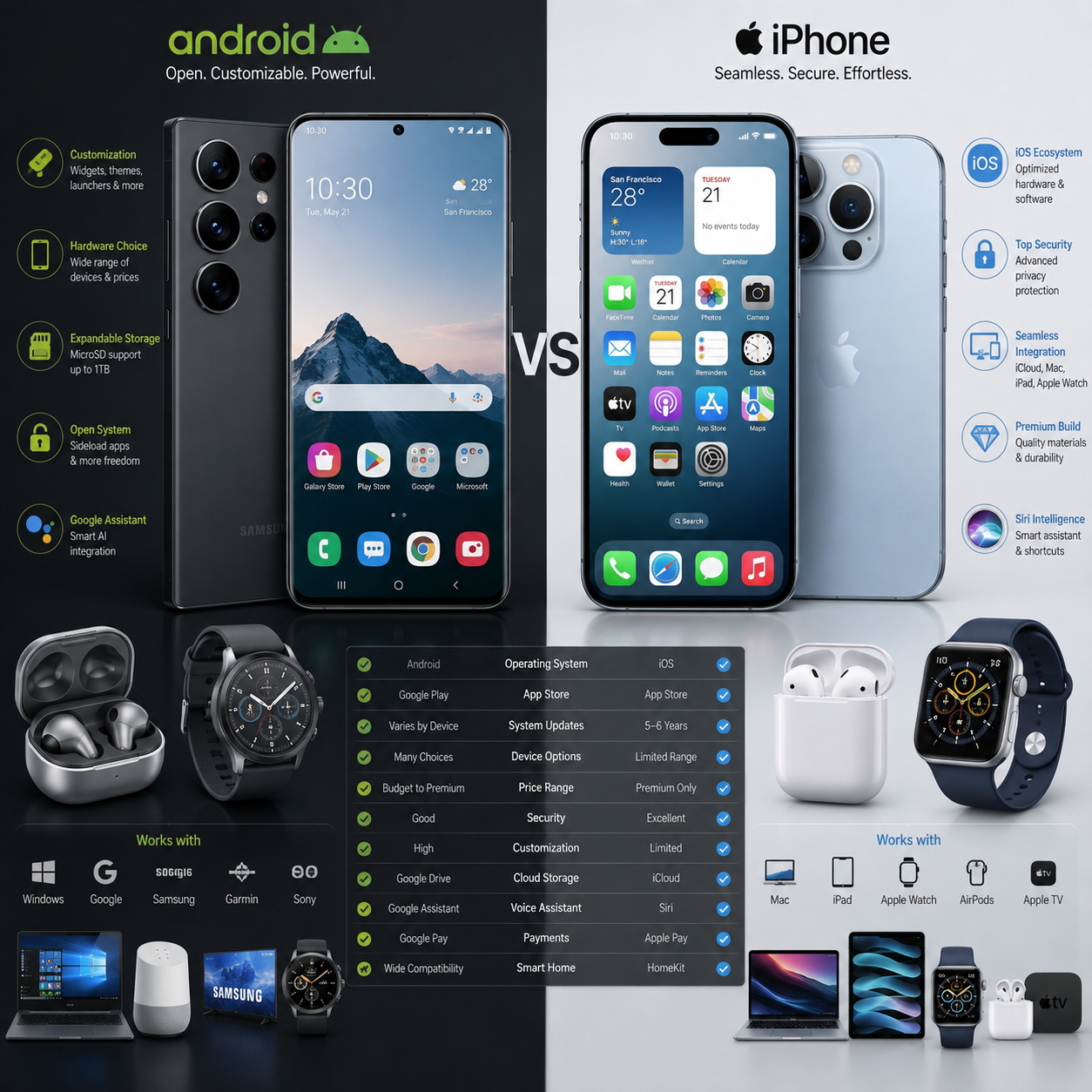
Choosing between Android and iOS in 2026 is less about finding a universal winner and more about matching a platform to the way you use technology. Android smartphones offer broad hardware choice, deep customization, and strong options at almost every price. The iPhone delivers a consistent user interface, predictable software support, and unusually smooth integration with other Apple devices.
Both platforms now provide excellent performance, capable cameras, mature privacy controls, and access to the major apps. The meaningful differences appear in ownership: how much control you want, how much you plan to spend, which devices you already own, and whether you prefer flexibility or simplicity.
Android vs iOS at a Glance
Android is usually better for choice, customization, and budget flexibility, while iOS is usually better for consistency, ecosystem integration, and straightforward long-term use. The right decision depends on which trade-offs matter most to you.
| Priority | Best fit | Why |
|---|---|---|
| Lowest price and widest selection | Android | Many manufacturers offer entry-level, mid-range, foldable, rugged, and premium phones. |
| Simple, consistent experience | iOS | Apple controls the hardware, operating system, and core support process. |
| Customization and file control | Android | Launchers, default apps, widgets, split-screen tools, and broader file access provide more control. |
| Integration with laptops, tablets, and watches | iOS | Apple devices share features such as AirDrop, iMessage, FaceTime, and continuity tools. |
| Affordable gaming and hardware variety | Android | Buyers can choose high-refresh-rate displays, gaming phones, large batteries, and active cooling. |
| Video consistency and resale value | iPhone | iPhones tend to offer predictable camera behavior and strong demand in the used market. |
Android is not one uniform experience. A Pixel, Galaxy, OnePlus, Motorola, or Xiaomi phone can feel substantially different because manufacturers add their own interface, tools, and update commitments. iOS has less hardware variety, but that narrower range makes the experience easier to predict.
Design, User Experience, and Customization
Android provides more personalization, whereas iOS emphasizes consistency and a shorter learning curve. Both operating systems are easy for everyday tasks, but they give users different levels of control over navigation, home screens, notifications, and default behavior.
Android lets you change launchers, icon packs, widgets, keyboards, browsers, messaging apps, and many default applications. Split-screen multitasking, detailed home-screen layouts, notification channels, and file-management tools are especially useful for power users. Some Android smartphones also include desktop-style modes that connect the phone to a monitor or keyboard.
That freedom can create friction. Menus differ between manufacturers, duplicate apps may appear alongside Google services, and settings can be difficult to locate when a phone uses a heavily customized interface. A clean Android implementation is often remarkably simple; a crowded one may require more setup.
iOS offers a more controlled interface. Home Screen and Lock Screen widgets, Focus modes, app organization, notification summaries, and customizable controls provide more flexibility than older iPhone software did. Still, Apple decides how many system behaviors can be changed. Users who want a fully redesigned home screen or extensive file access may find those limits restrictive.
A useful test is the friction-versus-control rule: choose Android if you enjoy configuring your phone or need specialized workflows; choose iOS if you want most decisions made consistently before the device reaches your hand.
Performance, Cameras, and Hardware Choice
Flagship Android phones and iPhones both deliver more than enough speed in 2026, but Android offers greater hardware variety while iPhone favors consistency. Differences matter most in sustained gaming, photography preferences, battery behavior, display design, and the price tier you can afford.
Premium Android smartphones compete with iPhones through high-end processors, fast OLED displays, large batteries, advanced cooling, satellite or emergency features in some markets, and increasingly capable artificial-intelligence tools. Buyers can select compact models, large phones, foldables, stylus-equipped devices, or gaming-focused designs. That range is Android’s largest hardware advantage.
Apple’s iPhone lineup is narrower, yet its processors remain extremely capable for demanding apps, video editing, and gaming. iOS developers also target a smaller number of current device families, which can help games and creative applications behave consistently. Choosing an iPhone for performance means accepting fewer design choices and, in many cases, a higher starting price.
Camera quality is more complicated than a megapixel comparison. Android manufacturers often lead in zoom flexibility, large sensors, manual controls, and computational photography experiments. iPhones commonly stand out for dependable color, fast capture, strong stabilization, and consistent video across cameras. A serious photographer should compare the exact models, because platform averages hide major differences between budget and flagship hardware.
For gaming, look at the whole package: chipset, sustained performance, display refresh rate, thermal design, battery capacity, accessory support, and game availability. Android can offer better value for players who want a 144Hz screen or gaming triggers. iPhone can be attractive for users who prioritize polished releases and strong processor performance in a compact device.
Software Updates, Privacy, and Security
iOS generally offers more uniform update delivery, while Android security depends more heavily on the manufacturer and model. Both platforms can be secure when kept updated, protected with a strong lock method, and used carefully.
Apple releases iOS updates directly to supported iPhones, so owners typically receive the same major release at roughly the same time. Android updates arrive through a chain involving Google, the phone manufacturer, carriers, and regional testing. That process has improved, but delivery speed and support length still vary by brand and product tier.
Before buying an Android smartphone, check three separate promises:
- How many years of operating-system upgrades are included?
- How long will monthly or quarterly security patches continue?
- Does the manufacturer have a credible history of meeting those commitments?
Privacy works differently on each platform. iOS emphasizes app tracking controls, permission prompts, on-device processing in selected features, and strict App Store rules. Android provides granular permission management, privacy dashboards, sandboxing, and Google Play protections, while also offering more choice in app stores and system services.
No platform removes every risk. Sideloading unknown Android software increases exposure, but installing unnecessary iPhone apps or granting extensive permissions can also weaken privacy. Use a long passcode, enable multifactor authentication, install updates promptly, and review location, microphone, photo, and notification access every few months. The Cybersecurity and Infrastructure Security Agency provides general guidance that applies to either platform.
Apps, Ecosystems, and Everyday Features
iOS leads in seamless ecosystem continuity, while Android provides broader interoperability and more hardware choice. The best platform often depends on the devices already sitting on your desk or in your pocket.
An iPhone works particularly well with a Mac, iPad, Apple Watch, and AirPods. AirDrop simplifies nearby file transfers; Handoff moves selected activities between Apple devices; iMessage and FaceTime remain deeply integrated; and Apple Watch support is designed around the iPhone. These conveniences save small amounts of time repeatedly, which is why ecosystem lock-in can feel practical rather than merely commercial.
Android connects naturally with Windows PCs, Chromebooks, Google services, smart-home products, and accessories from many companies. Quick Share, cross-device features, Google Photos, Google Drive, and manufacturer tools can create a strong workflow without requiring one brand for every product. Samsung Galaxy users may gain additional continuity through Galaxy tablets, laptops, watches, and earbuds.
Core apps are available on both platforms, but small differences remain. Some apps launch first on iOS, while Android may provide better widgets, default-app control, split-screen use, or file access. Messaging is also shaped by the people you communicate with and the standards supported in your region. Before switching, confirm that your password manager, banking app, work tools, wearables, and smart-home equipment support the destination platform.
Think of the ecosystem as a network effect. The more compatible devices you own, the more valuable continuity becomes. If you use only a phone and wireless earbuds, ecosystem differences may be minor. If you own a laptop, tablet, watch, and shared family services, the choice becomes much more consequential.
Price, Value, and Long-Term Ownership
Android offers the broadest price range, while iPhone often provides stronger resale value and a more predictable premium ownership experience. Value depends on the total cost over several years, not only the price shown at checkout.
Android dominates the entry-level and mid-range markets. A careful buyer can find phones with bright OLED displays, capable cameras, fast charging, and long battery life without paying flagship prices. The compromise may involve slower updates, weaker water resistance, less consistent cameras, or reduced performance under heavy workloads.
iPhones usually cost more upfront, though older or refurbished models can make iOS accessible at lower prices. Strong resale demand may reduce the effective cost if you sell after two or three years. Apple’s accessories and repairs can be expensive, so resale value should not be treated as automatic savings.
Compare ownership using this simple formula:
Total ownership cost = purchase price + accessories and repairs − resale value.
Also examine battery replacement options, repair availability, storage pricing, warranty terms, and the update period. A cheaper phone that becomes frustrating after two years may deliver less value than a better-supported model. Conversely, paying for a premium iPhone makes little sense if you replace phones frequently and do not use Apple ecosystem features.
Repairability is another practical consideration. Modular construction, available parts, independent repair networks, and battery service can extend a phone’s useful life. Policies and repair options vary by country and model, so check local support before buying rather than assuming every device follows the same standard.
Which Is Better for You in 2026?
Android is the better choice for flexibility, hardware variety, and budget control; iOS is the better choice for consistency, Apple ecosystem integration, and simple long-term use. Use your priorities, rather than online platform arguments, to make the final decision.
- Choose Android if you want a phone under a strict budget, extensive customization, expandable workflows, foldable designs, fast charging, or a choice among many manufacturers.
- Choose iPhone if you use a Mac or Apple Watch, value predictable updates, record a lot of video, prefer a consistent interface, or want strong resale demand.
- Choose Android for productivity if split-screen apps, file management, stylus input, desktop modes, or specialized multitasking matter every week.
- Choose iPhone for creative work if your workflow depends on Mac continuity, reliable video capture, AirDrop, and polished mobile editing apps.
- Choose either flagship for gaming, but compare sustained performance, display refresh rate, thermal behavior, controller support, and the games you actually play.
Switching platforms is worthwhile when your current phone creates repeated friction. Android-to-iPhone migration is usually straightforward for contacts, photos, calendars, and major apps, although app purchases, message history, files, and wearable compatibility require checking. iPhone-to-Android migration has also improved, but users should verify password managers, health data, subscriptions, and cloud-photo settings before wiping the old device.
For a final decision, score each platform from one to five for control, cost, camera needs, support, and ecosystem fit. Double the score for the category that matters most. That quick framework prevents a minor preference, such as icon layout, from outweighing a major issue, such as incompatible work hardware.
Android vs iOS FAQs
Is Android or iOS more secure in 2026?
Neither is automatically secure in every situation. iOS offers highly consistent updates and strict app distribution, while Android provides strong platform security but varies by manufacturer, update schedule, and whether users install software outside Google Play.
Which platform offers better value for money?
Android usually offers better value at entry-level and mid-range prices. iPhone can provide better long-term value through software support and resale prices, especially when the buyer already owns Apple devices.
Is Android or iPhone better for cameras and video?
Flagship Android phones may offer more zoom and hardware experimentation. iPhones are often the safer choice for consistent video and simple point-and-shoot results. Compare specific models for the most accurate answer.
Which is better for gaming and performance?
Both provide excellent flagship performance. Android offers more gaming-focused hardware and display choices, while iPhone often delivers very strong processor performance and consistent app optimization.
Should I switch from Android to iOS or from iOS to Android?
Switch if the other platform solves a recurring problem, such as poor ecosystem compatibility, missing customization, weak updates, or an unsuitable price range. Check app purchases, cloud storage, wearable support, and data-transfer limits before moving.